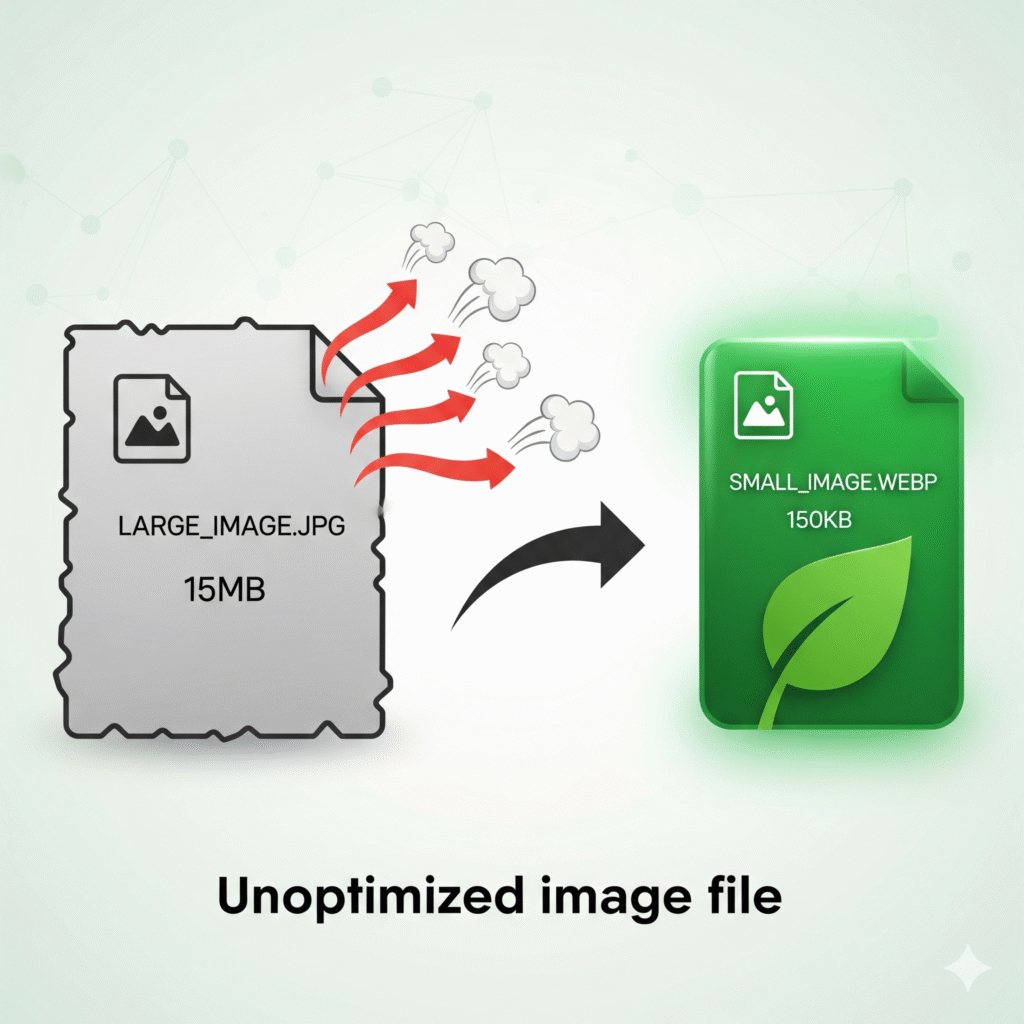
How Image Conversion Cuts Carbon Emissions
Converting images reduces file sizes, lowering bandwidth usage and server load. WebP, with 25-34% smaller sizes than JPEG, and AVIF, offering up to 50% savings, minimize energy demands. For instance, converting a 2MB image to a 500KB WebP file cuts CO2 emissions by 60% per download. Batch processing via tools like your image converter website streamlines this, removing metadata to shave off 10-15% more.
Progressive loading, where low-res previews render first, further reduces energy by limiting initial data transfer. CDNs with edge caching deliver optimized images locally, cutting transmission distances. This supports “eco-friendly image compression techniques” queries, enhancing SEO through relevance.
Best Practices for Eco-Conscious Conversion
Start with format selection: use WebP for photos, SVG for vectors, and AVIF for high-res displays. Resize to match viewport needs—e.g., 600px width for mobile—avoiding overserving. Compress smartly with AI tools, targeting quality above 75% to avoid artifacts, and test with carbon calculators like Website Carbon to quantify savings.
Implement lazy loading with loading=”lazy” to defer off-screen images, reducing initial energy use by 20-30%. For e-commerce, optimize product images to under 100KB, boosting load speed and sustainability. Use renewable-energy-hosted CDNs to amplify gains.
Tools and Implementation
Your image converter website offers eco presets: upload files, select “green optimization,” and download reduced versions. Open-source tools like ImageMagick (e.g., convert input.jpg -quality 80 output.webp) or GIMP enable custom workflows. Monitor with Green Web Check to verify hosting sustainability.
Avoid pitfalls like over-compression, which wastes reprocessing energy, or neglecting fallbacks for legacy browsers, increasing redundant requests. Regular audits ensure ongoing efficiency.
SEO and Broader Benefits
Optimized images improve Core Web Vitals, like Largest Contentful Paint, enhancing search rankings. Use file names like “eco-image-conversion-guide-2025.webp” and alt text with keywords like “how to reduce website carbon footprint with images.” This targets “sustainable web performance tips” searches.