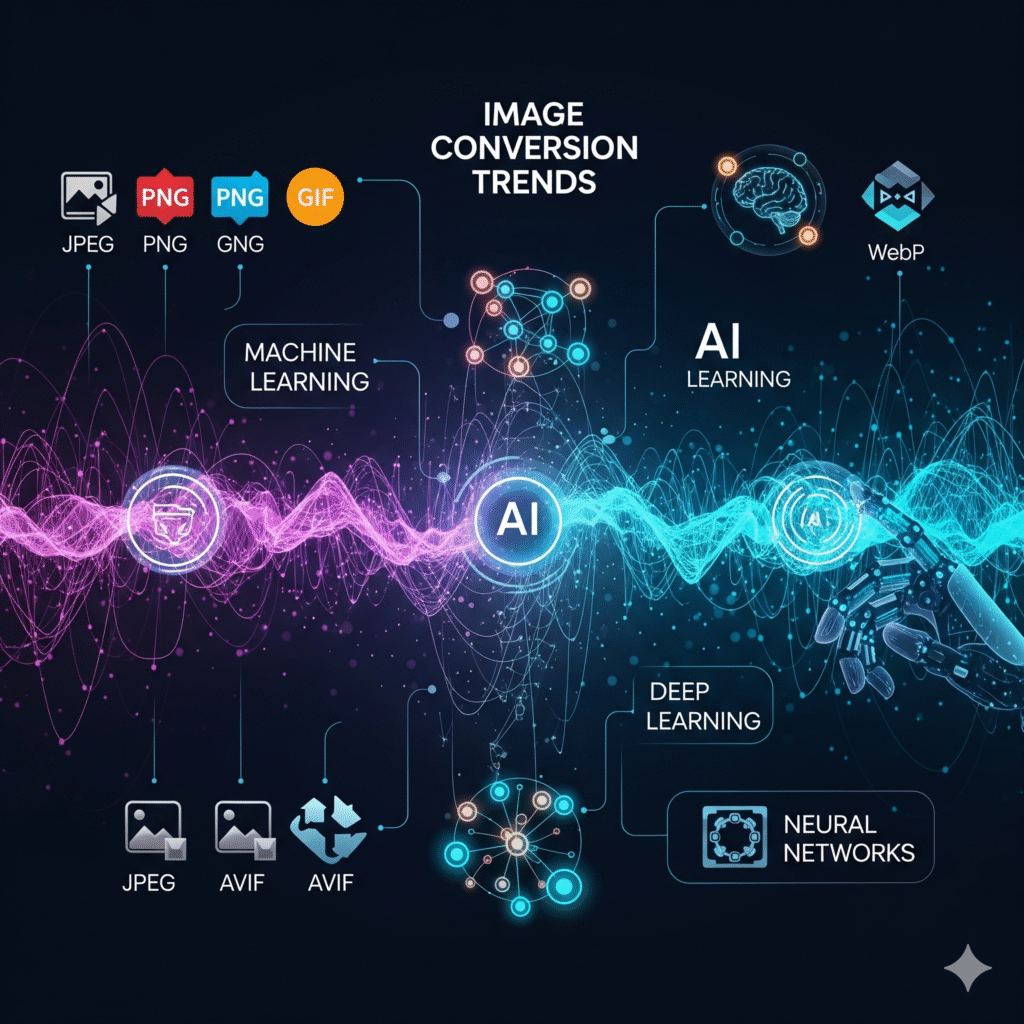
Next-Generation Image Formats
Traditional formats like JPEG and PNG are giving way to AVIF, JPEG XL (JXL), and HEIC. AVIF, rooted in AV1 video codec, offers up to 50% better compression than JPEG, supporting HDR and wide color gamuts for vibrant displays. JXL excels in lossless recompression of legacy JPEGs, preserving data while slashing sizes—ideal for archiving.
WebP remains dominant, but AVIF’s adoption in browsers like Chrome and Safari positions it as a frontrunner. HEIC, Apple’s efficiency champ, is expanding beyond iOS for mobile optimization. Tools like cwebp and online converters now support batch processing to these formats, with interactive guides aiding selection. For web devs, using tags with srcset ensures responsive delivery, targeting “best image formats for web 2025” searches.
Sustainability and Efficient Compression
The environmental footprint of digital media is under scrutiny. Image conversion trends emphasize eco-friendly practices: advanced compression reduces data center energy use by minimizing storage and bandwidth. Shrink.media highlights AI algorithms for “green” optimization, cutting carbon emissions from image-heavy sites.
Quantum-inspired compression, though nascent, promises exponential efficiency. Trends also include on-device conversion via edge computing, reducing cloud reliance. This supports sustainable web design, appealing to “eco-friendly image conversion technologies” queries and enhancing brand appeal.
Integration with Emerging Technologies
Image conversion is intertwining with AR/VR and Web3. For augmented reality, tools convert images to lightweight formats for seamless overlays, using computer vision for real-time adaptation. In NFTs and metaverses, blockchain-optimized conversions ensure tamper-proof metadata.
Multimodal insights from AI enable context-aware conversions, like auto-adjusting for user devices. The World Economic Forum’s Top 10 Emerging Technologies report underscores these integrations, forecasting broader AI creativity impacts. Developers should watch for WebP2 and AVIF evolutions, fostering innovation in game development and e-learning visuals.
Looking Ahead
The future of image conversion in 2025 and beyond promises efficiency, intelligence, and integration. By adopting AI tools, next-gen formats, and sustainable practices, creators can future-proof content.